Regarde structures – Quartier culturel des Faubourgs
client
Ville de Montréal
year
2025
place
Arrondissement Ville-Marie, Montréal (QC) Canada
format
Hauteur de 7 pieds
project type
Placemaking
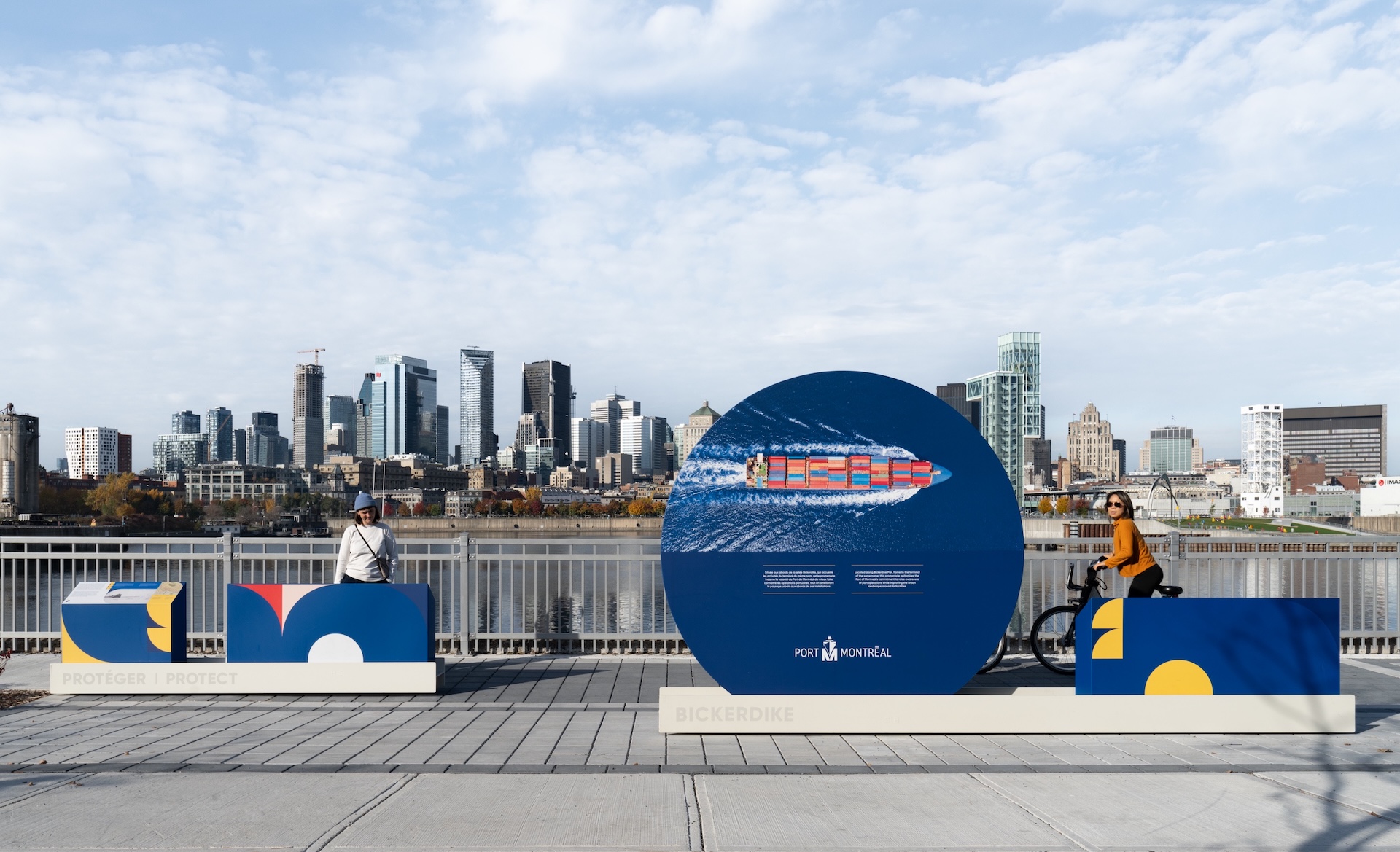
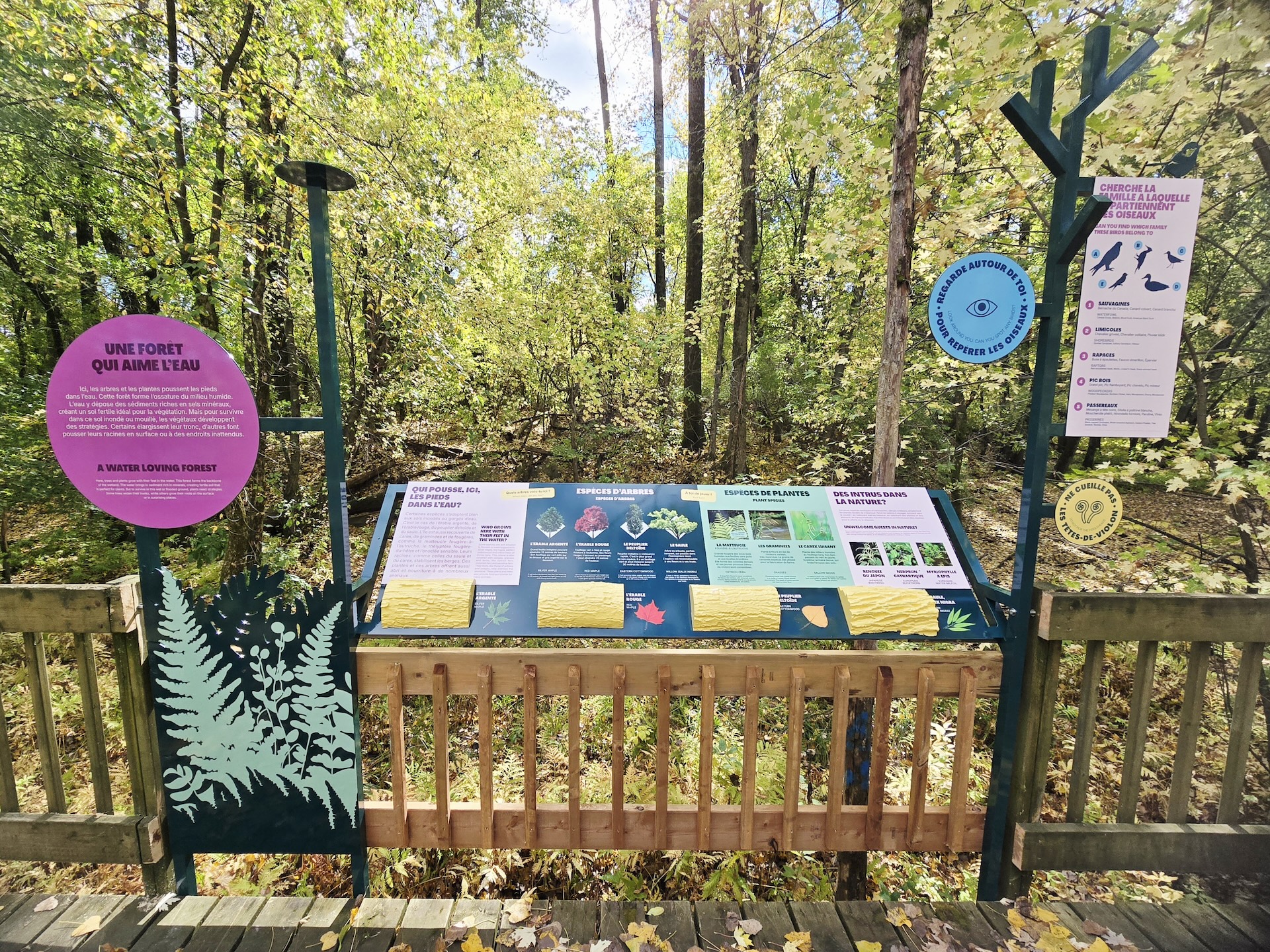
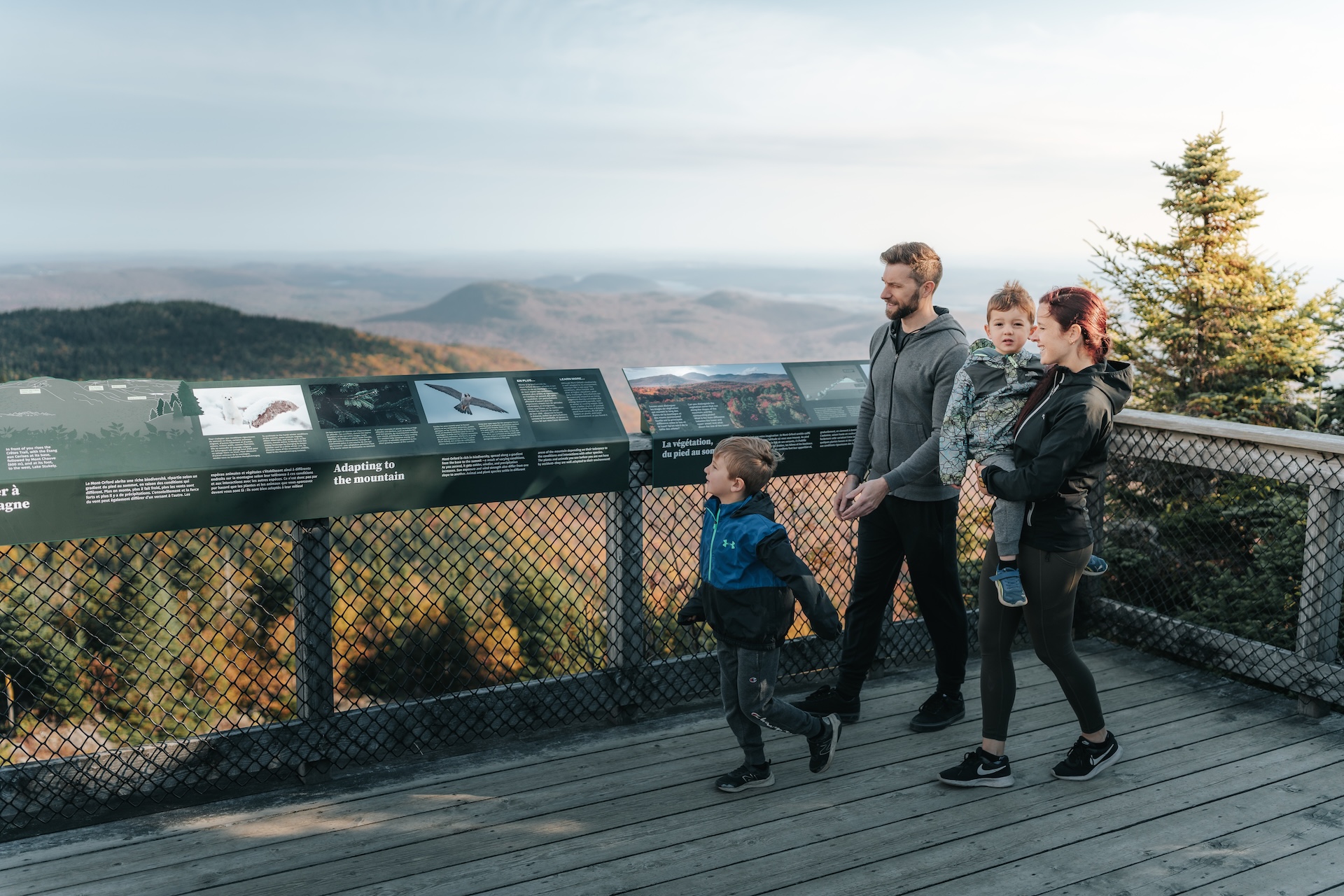
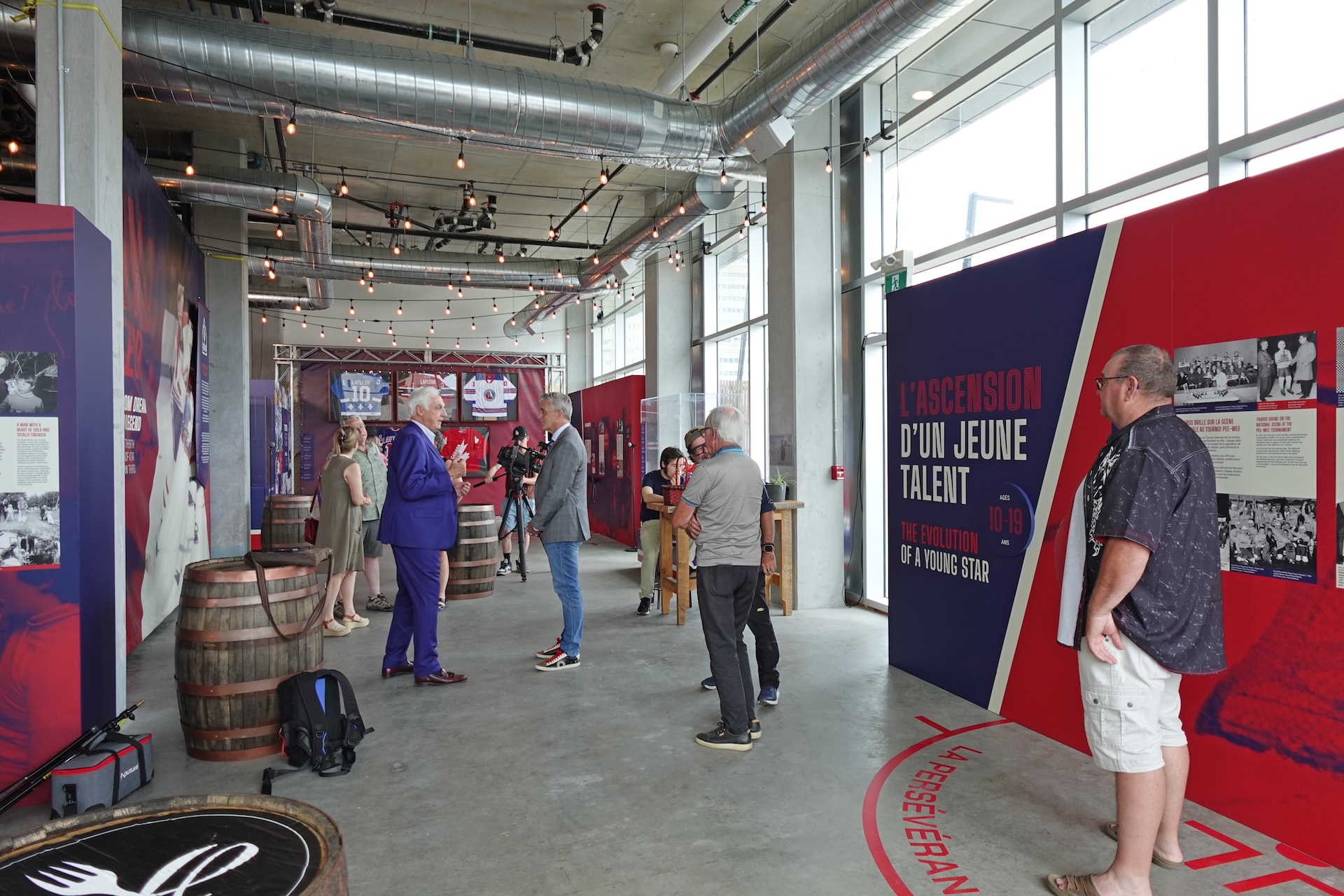
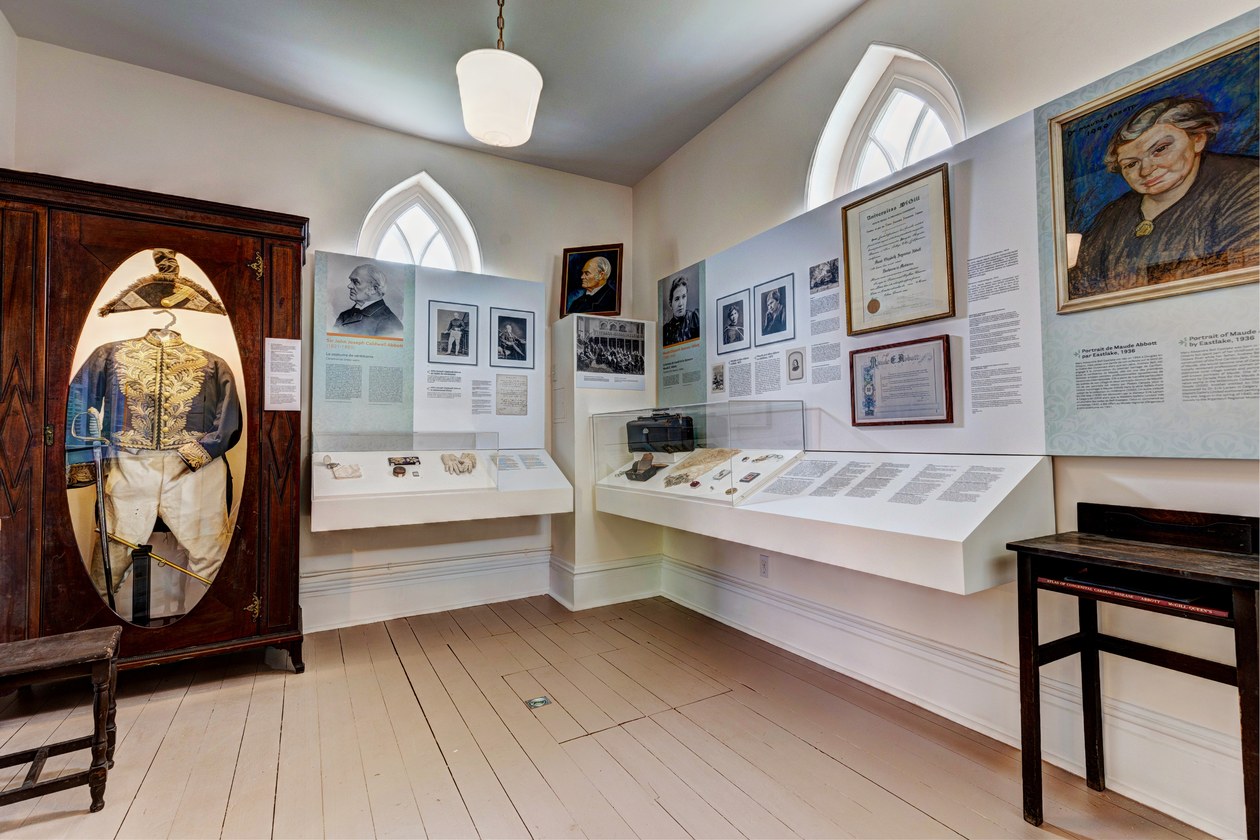
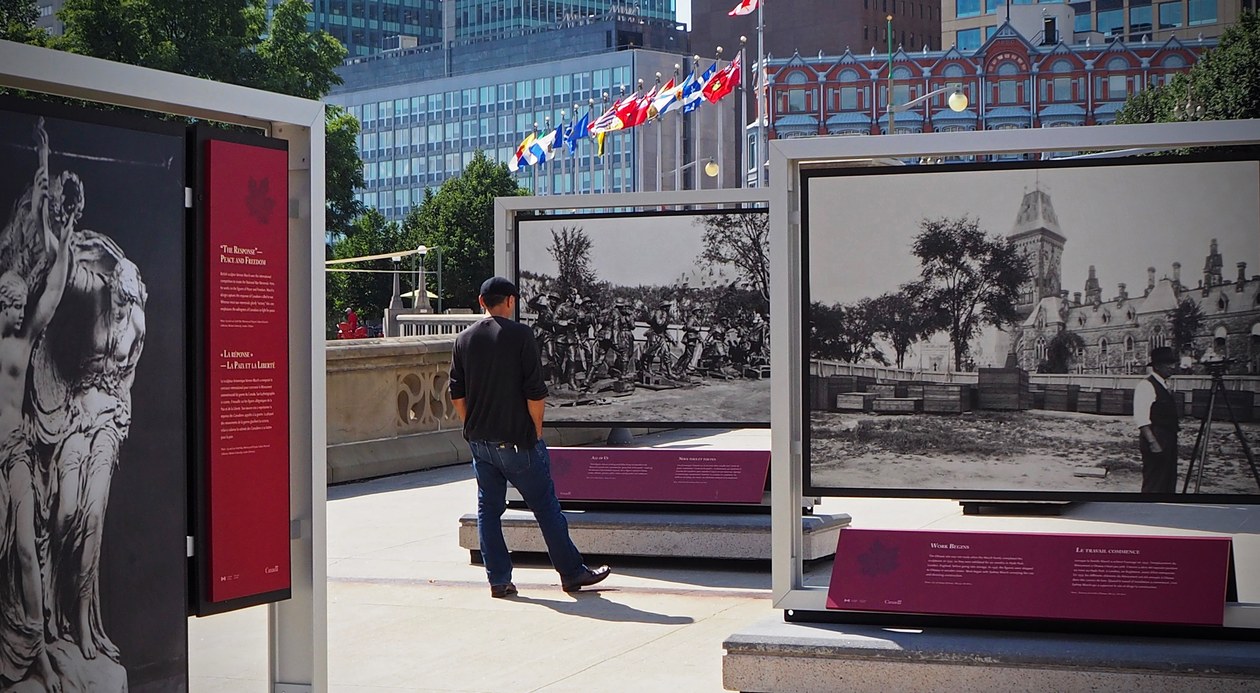
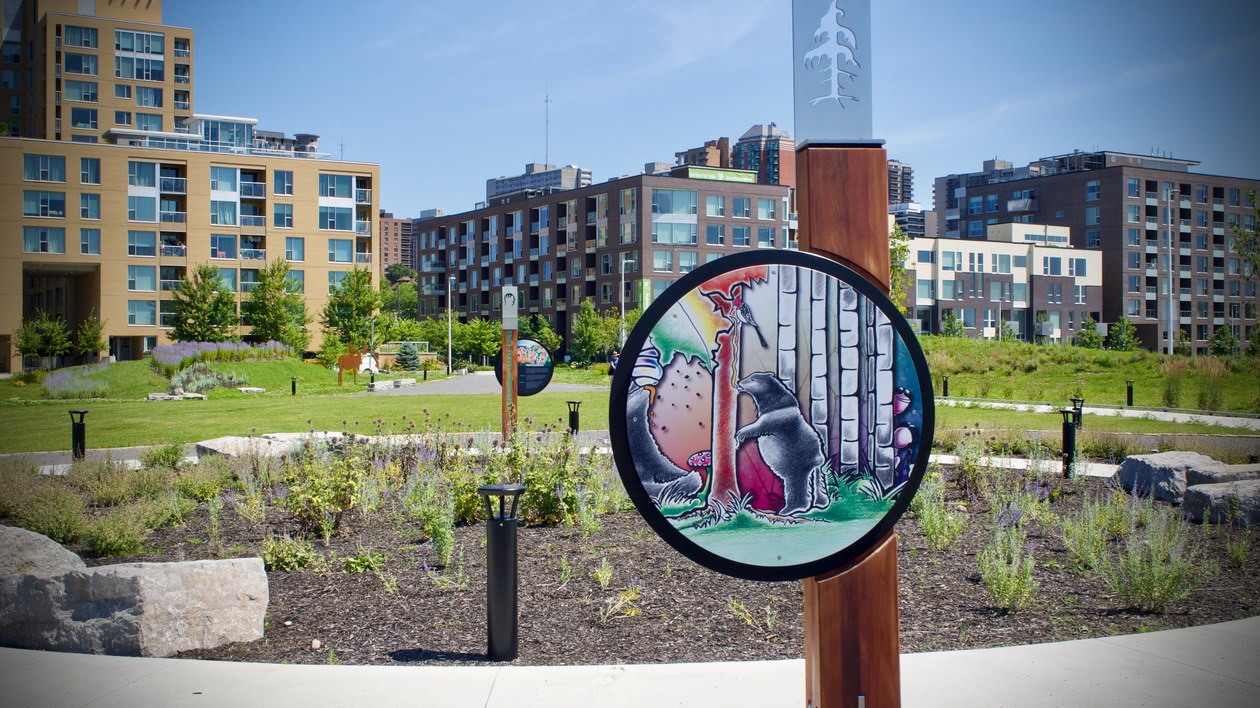
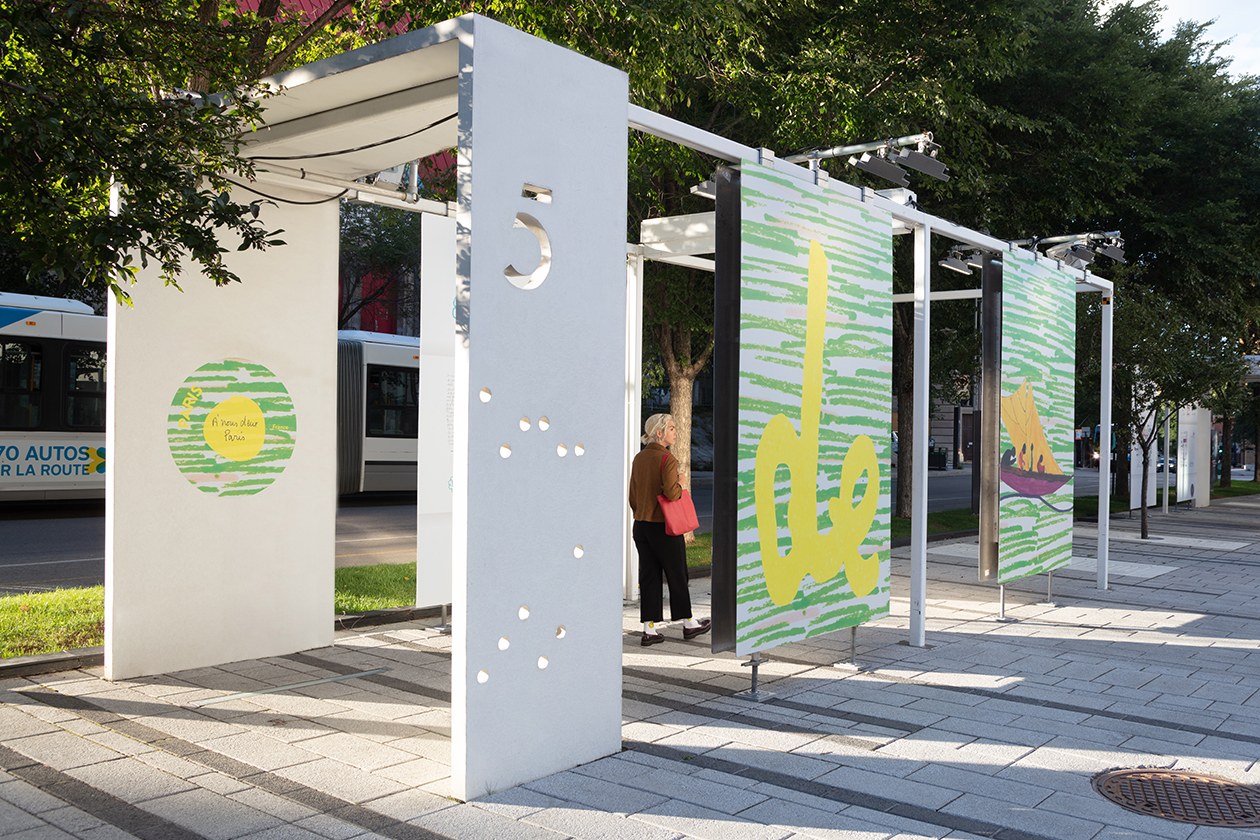
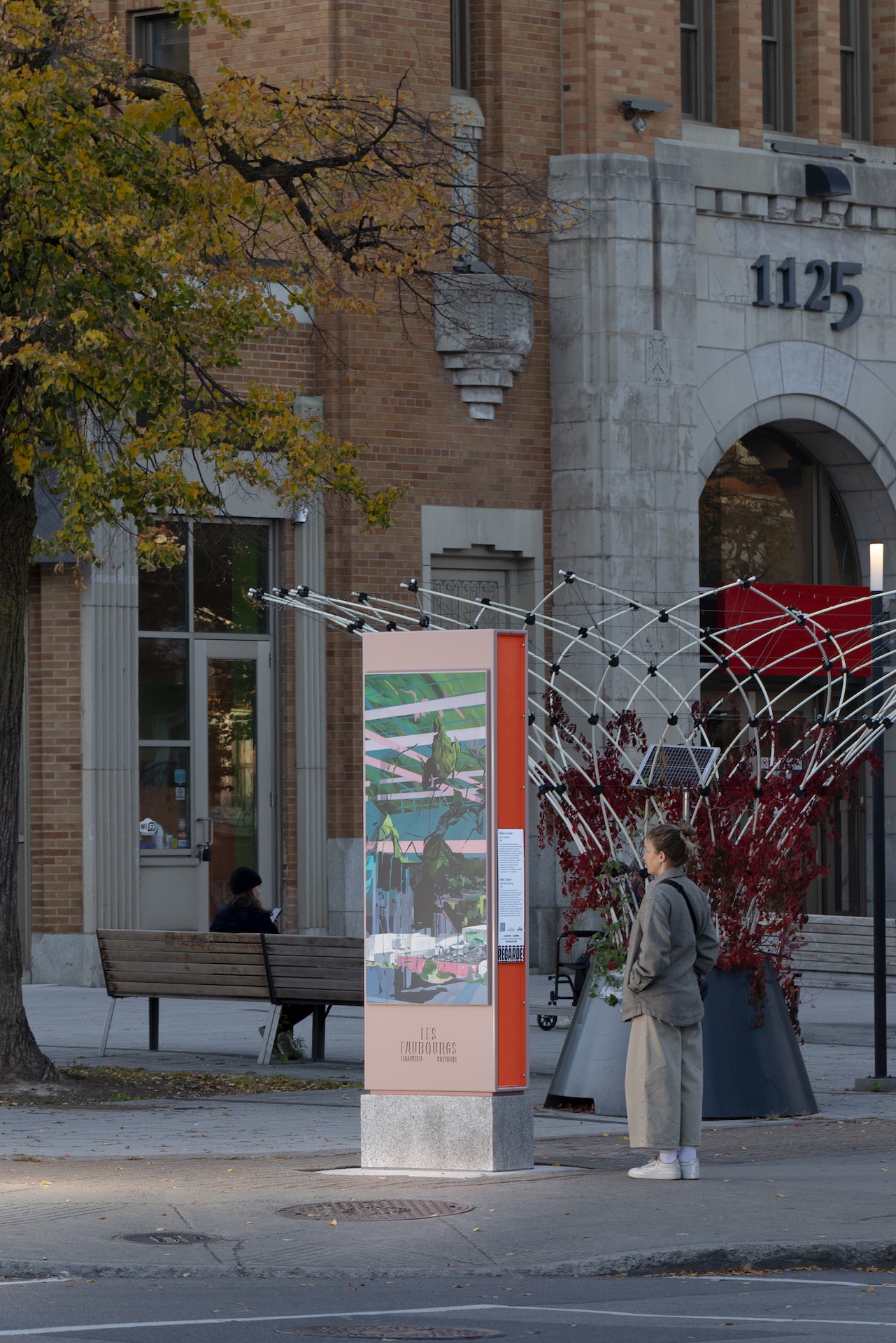
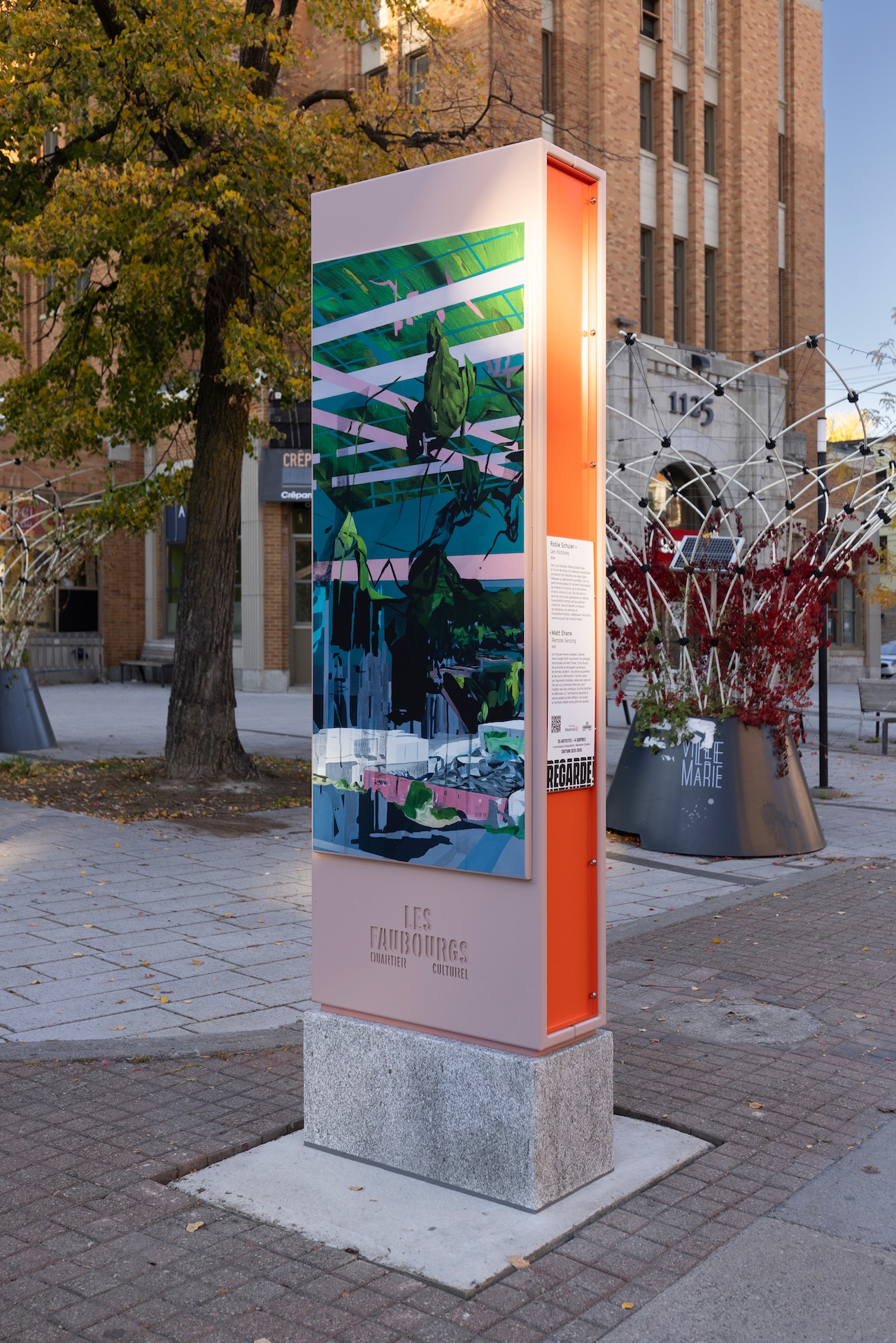
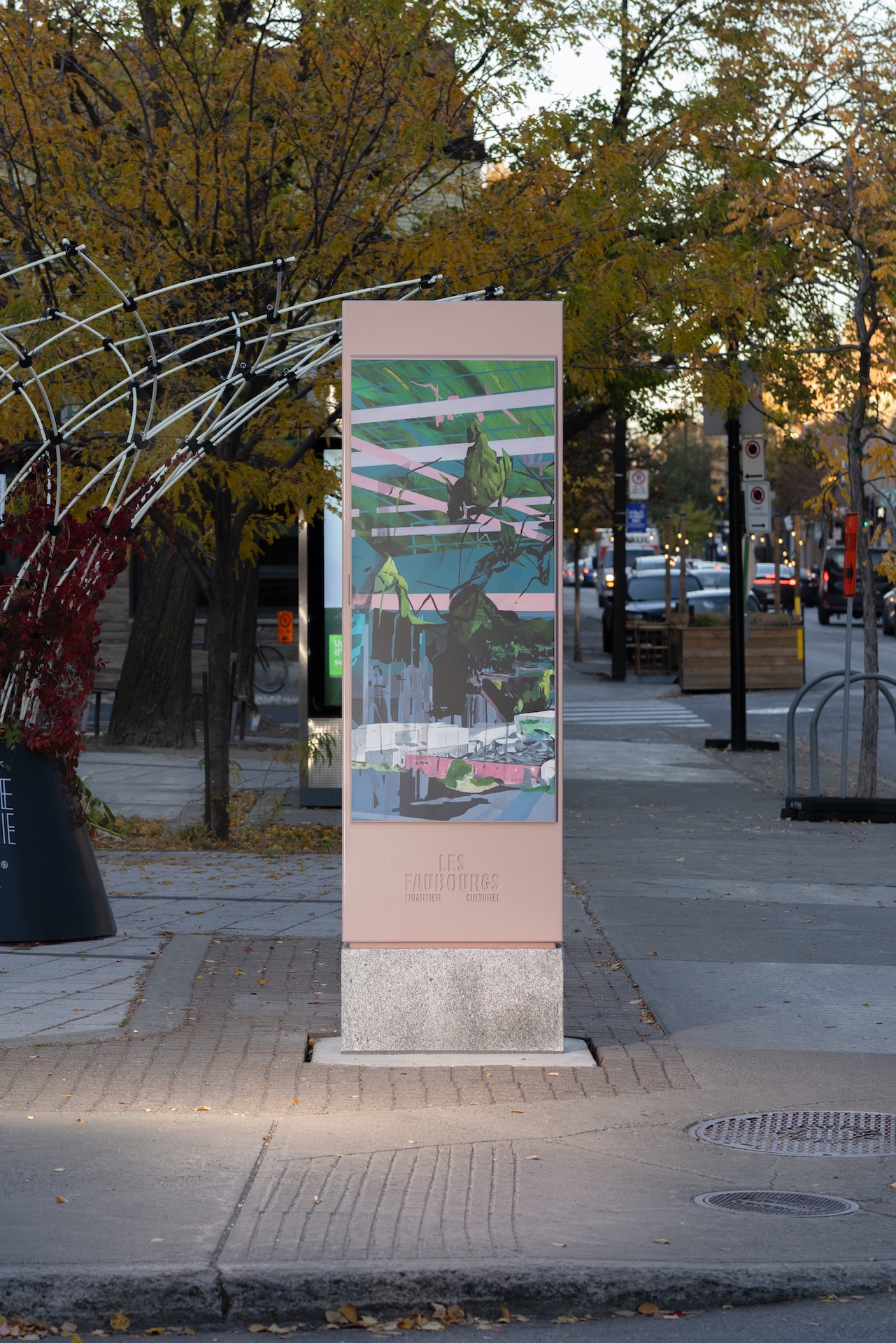
Sober and assertive, "Regarde" structures transform public space into an open-air gallery, celebrating Montreal's creativity in an ongoing dialogue between art, design, and community.
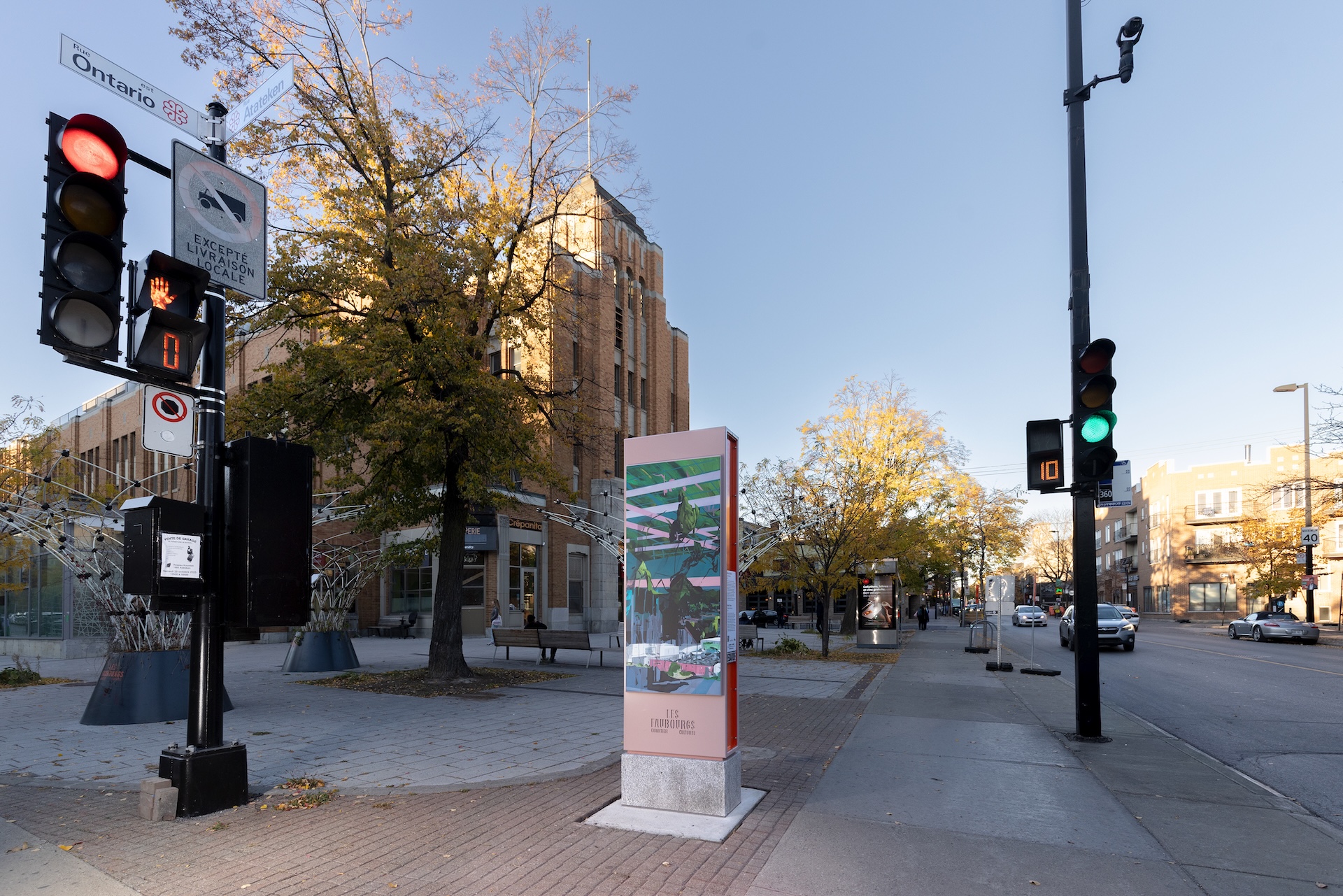
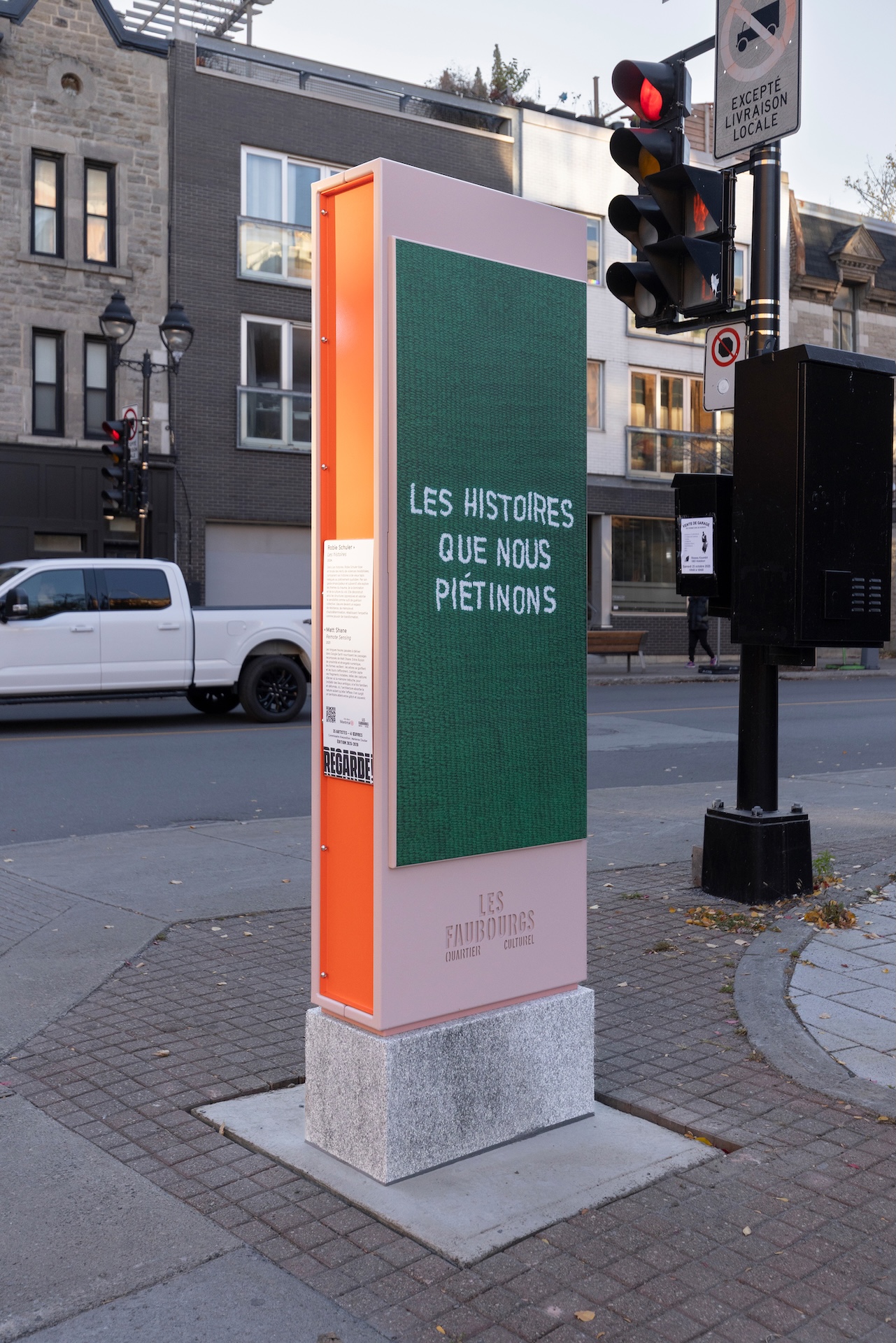
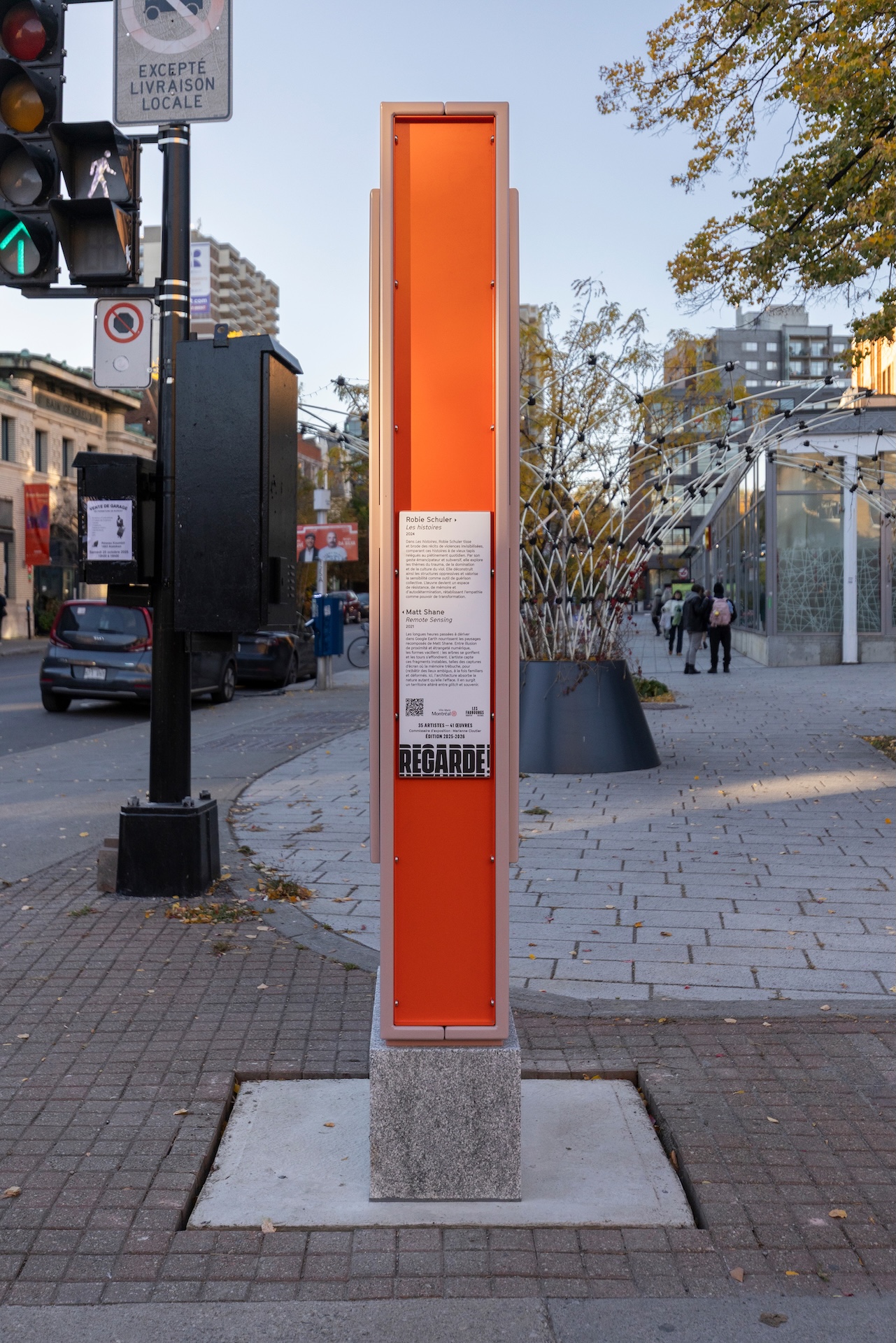
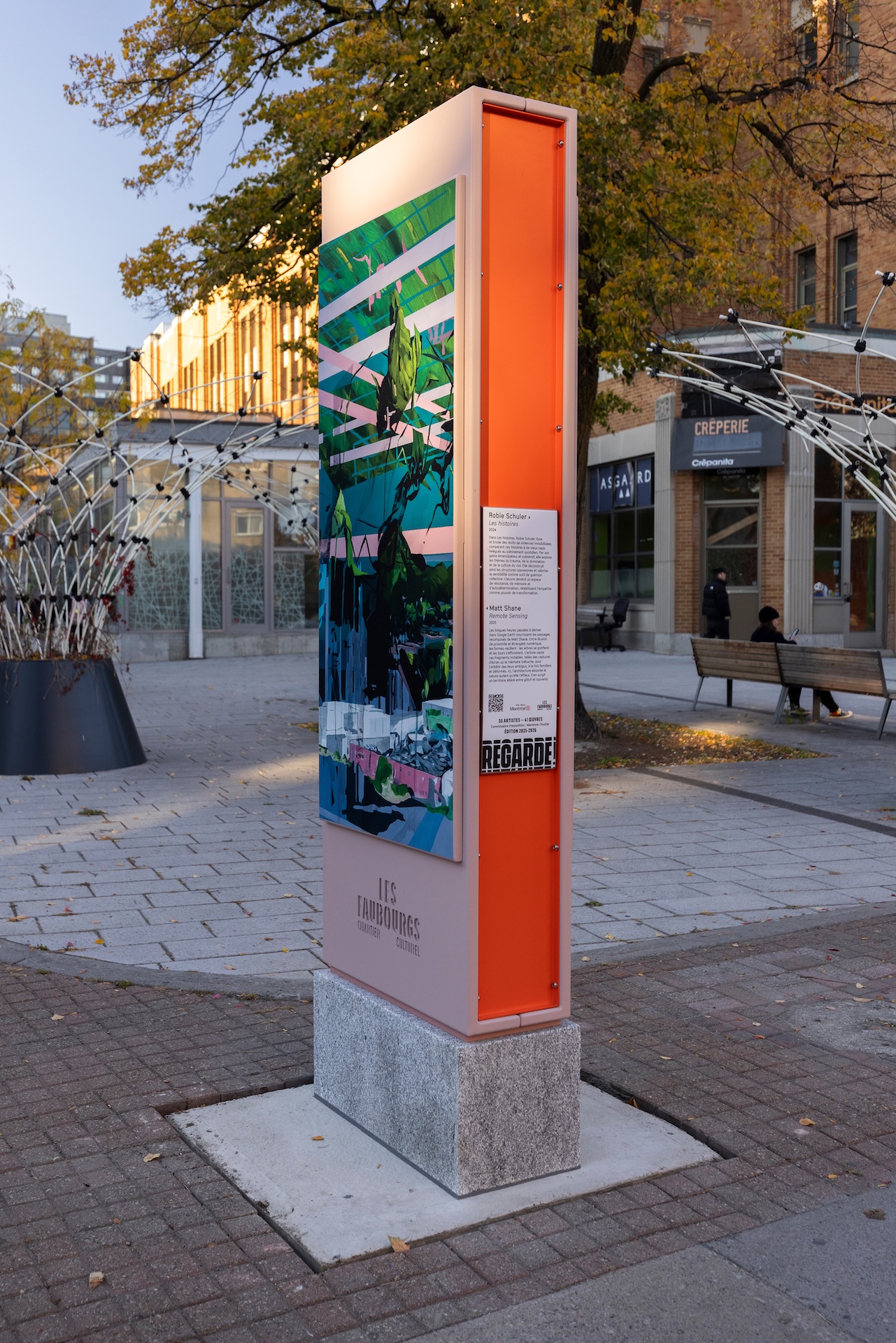
Designed for the Quartier culturel des Faubourgs, these permanent outdoor exhibition structures redefine the way artwork is displayed in urban spaces. At the crossroads of design furniture and cultural architecture, these structures offer an elegant, modular, accessible support to promote continuous access to culture while affirming the identity of the neighbourhood. Designed to last, they embody a responsible design approach, rooted in ecological transition and inclusion.
Conceptual choices
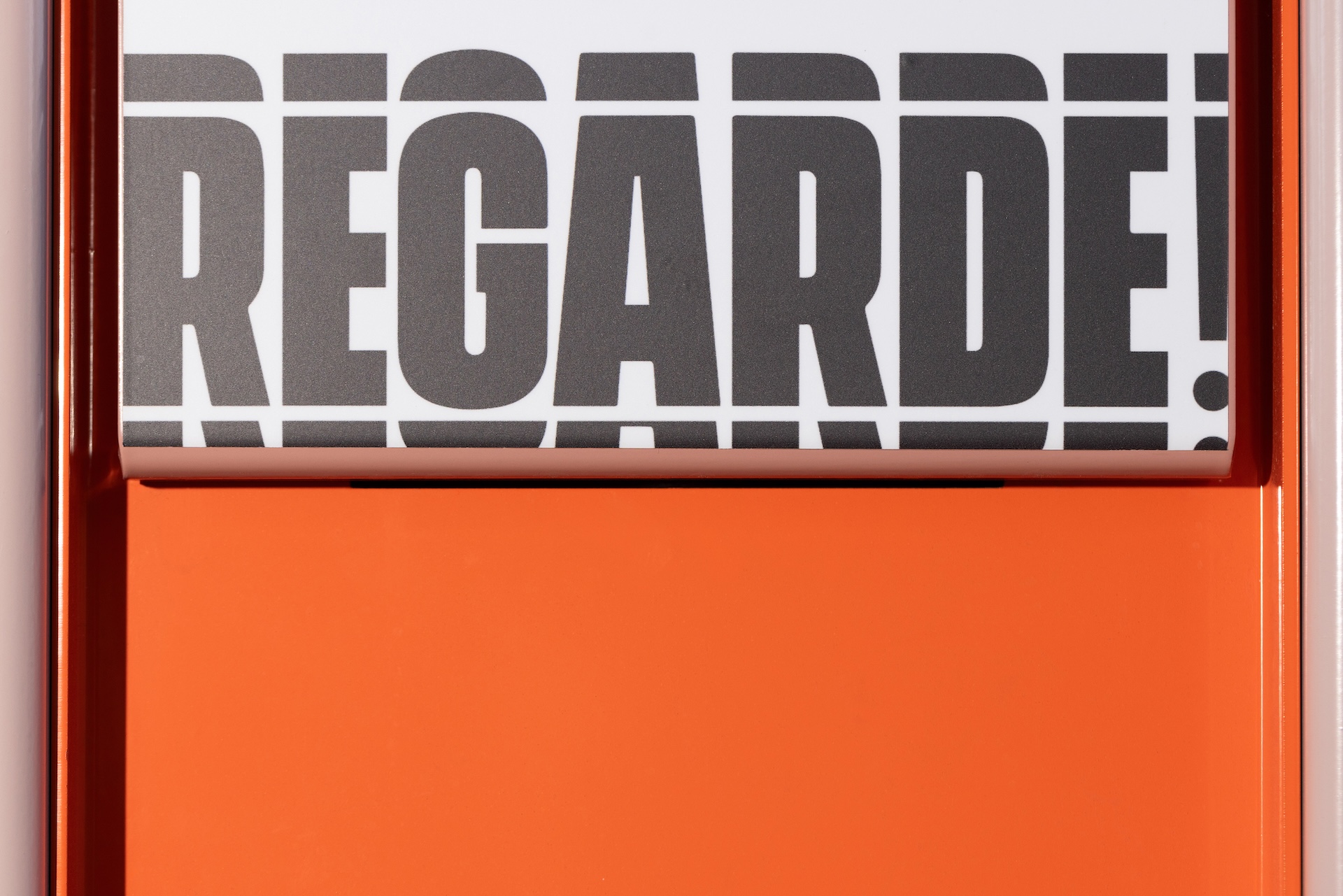
A balance between sobriety and expressiveness: an elegant design that fades into the background while asserting a strong identity. The structures become visual landmarks, echoing the rhythms of the cultural district.
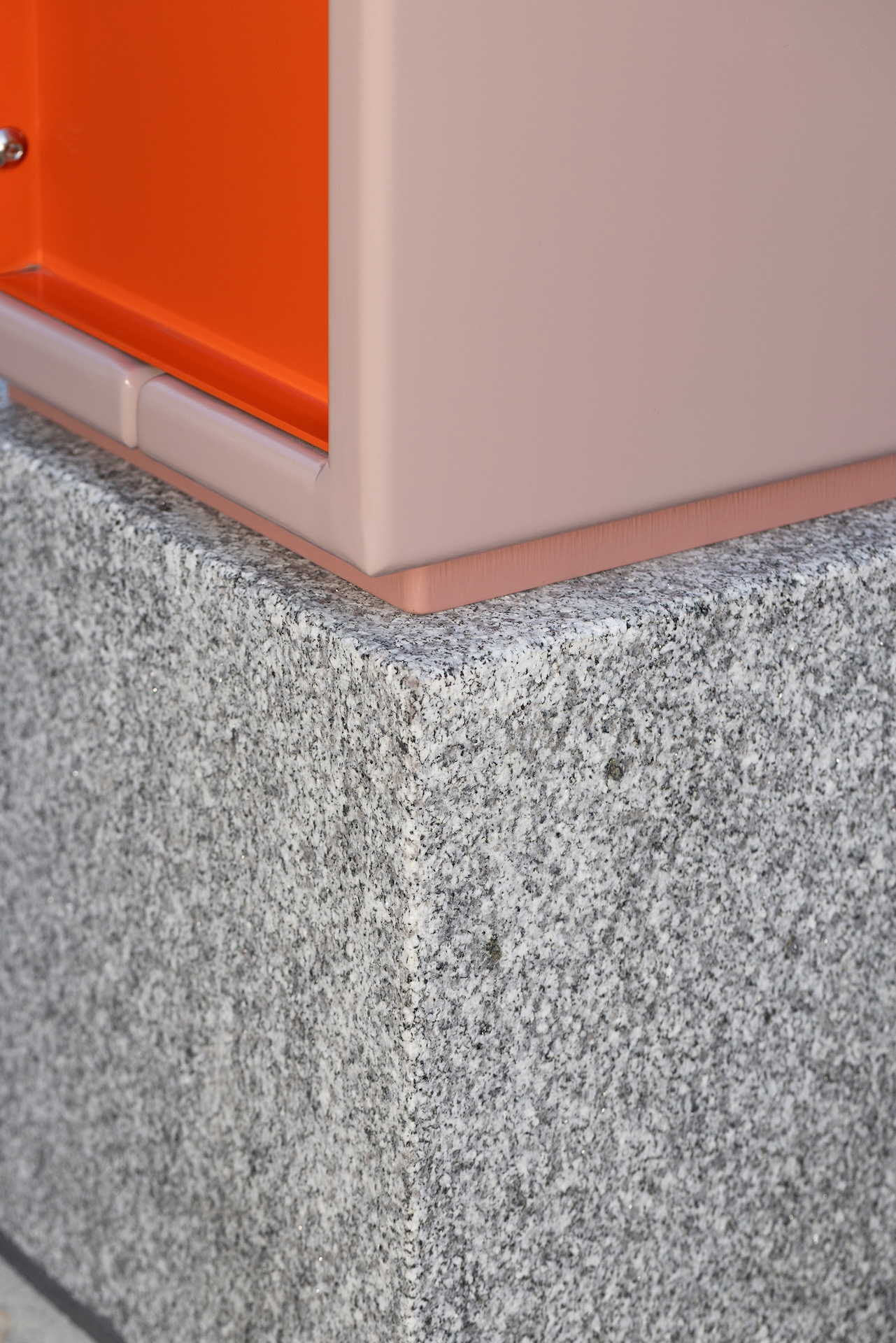
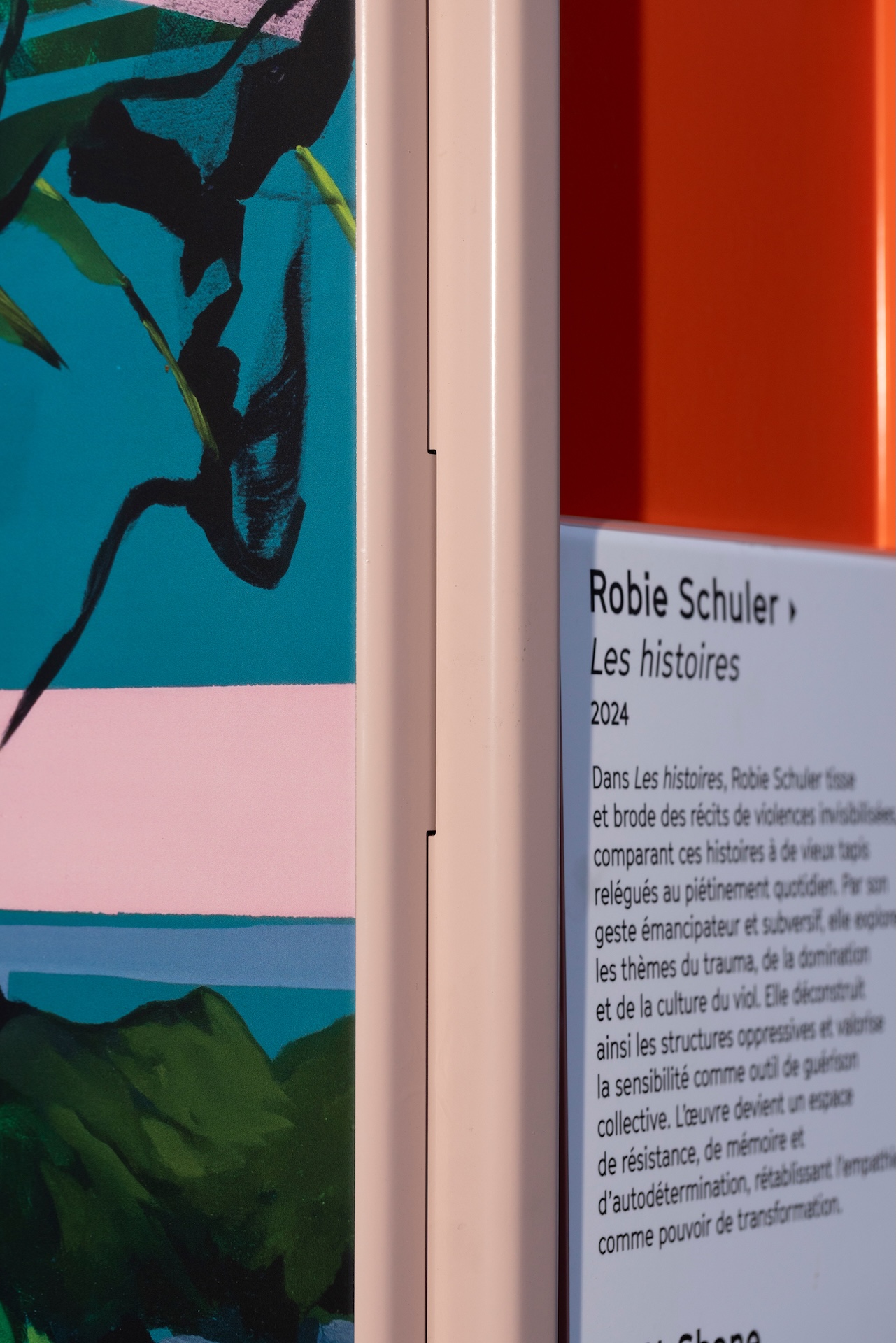
Every detail expresses the thoroughness and sensitivity of Montreal design, linking the area's industrial heritage with a contemporary and sustainable vision of culture.
Technical choices
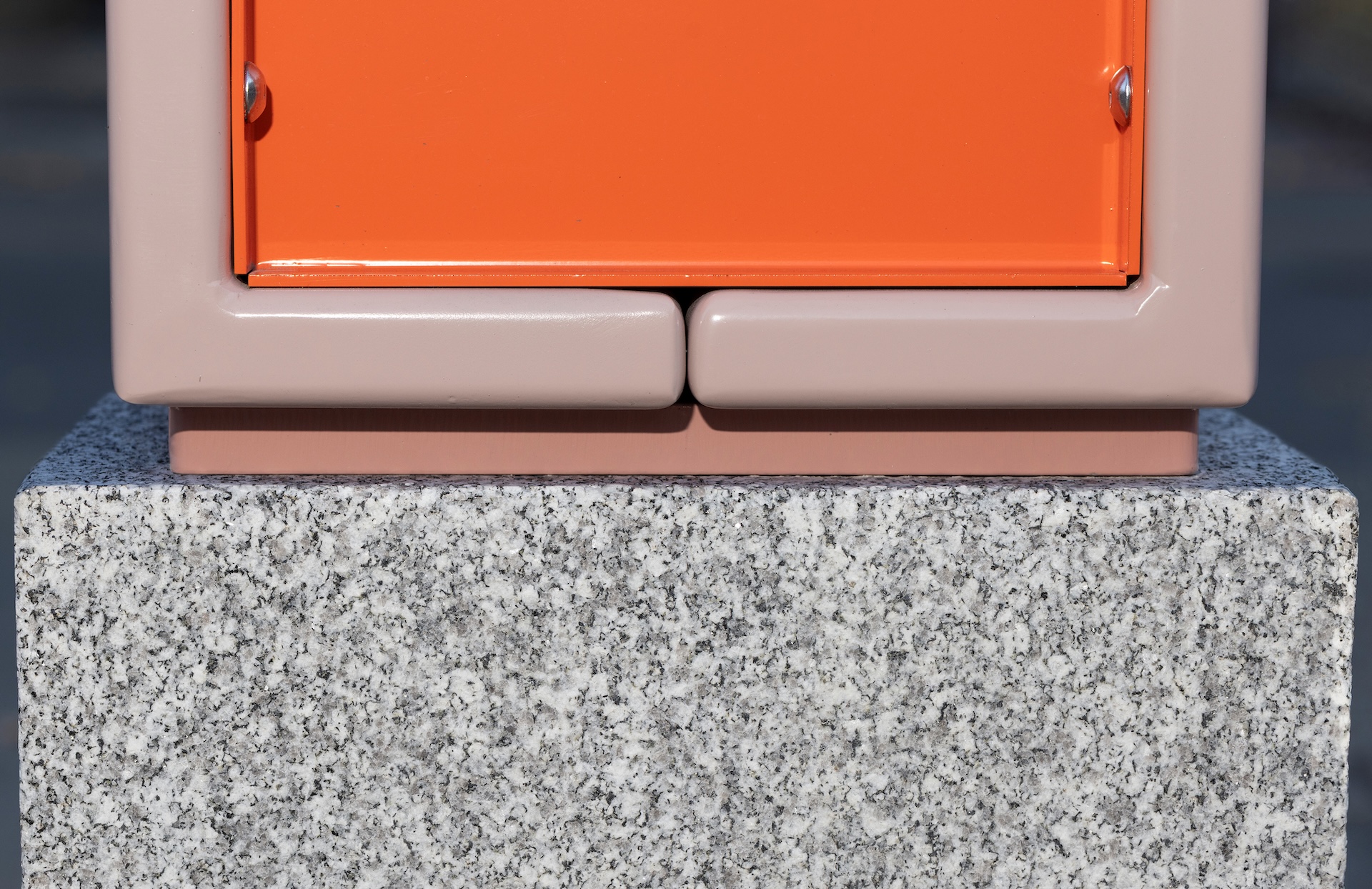
The structures, made of painted aluminum and local granite, are strong and lightweight. A system of interchangeable plates renew the works without interrupting the exhibition.
The entire system has been designed to guarantee minimum maintenance, maximum durability, and an installation that respects the public domain.
Challenges
- Combining durability, elegance, and urban integration
- Handling that is both simple and safe to rotate exhibits
- Creating a strong presence without compromising the legibility of the works
- Integrating universal accessibility principles despite narrow sidewalks
- Reducing the environmental impact at every stage of the exhibition's lifecycle, as it renews itself every year
RESULTS
- Year-round access to culture for the whole population
- Greater visibility for Montreal design in public spaces
- Modularity reduces costs and material consumption
- Strengthened sense of citizenship and understanding of the role of culture in the city